


Query console
Two ways to ask the same connection the same question.
Filter grammar
Section titled “Filter grammar”DocumentDb’s own string query syntax — the same text Query<T>().Where("…") takes
— with boxes for Where, OrderBy and an optional Project. Pick a table and a type and the rest reads
exactly like your application code:
status == 'shipped' and total:number > 25000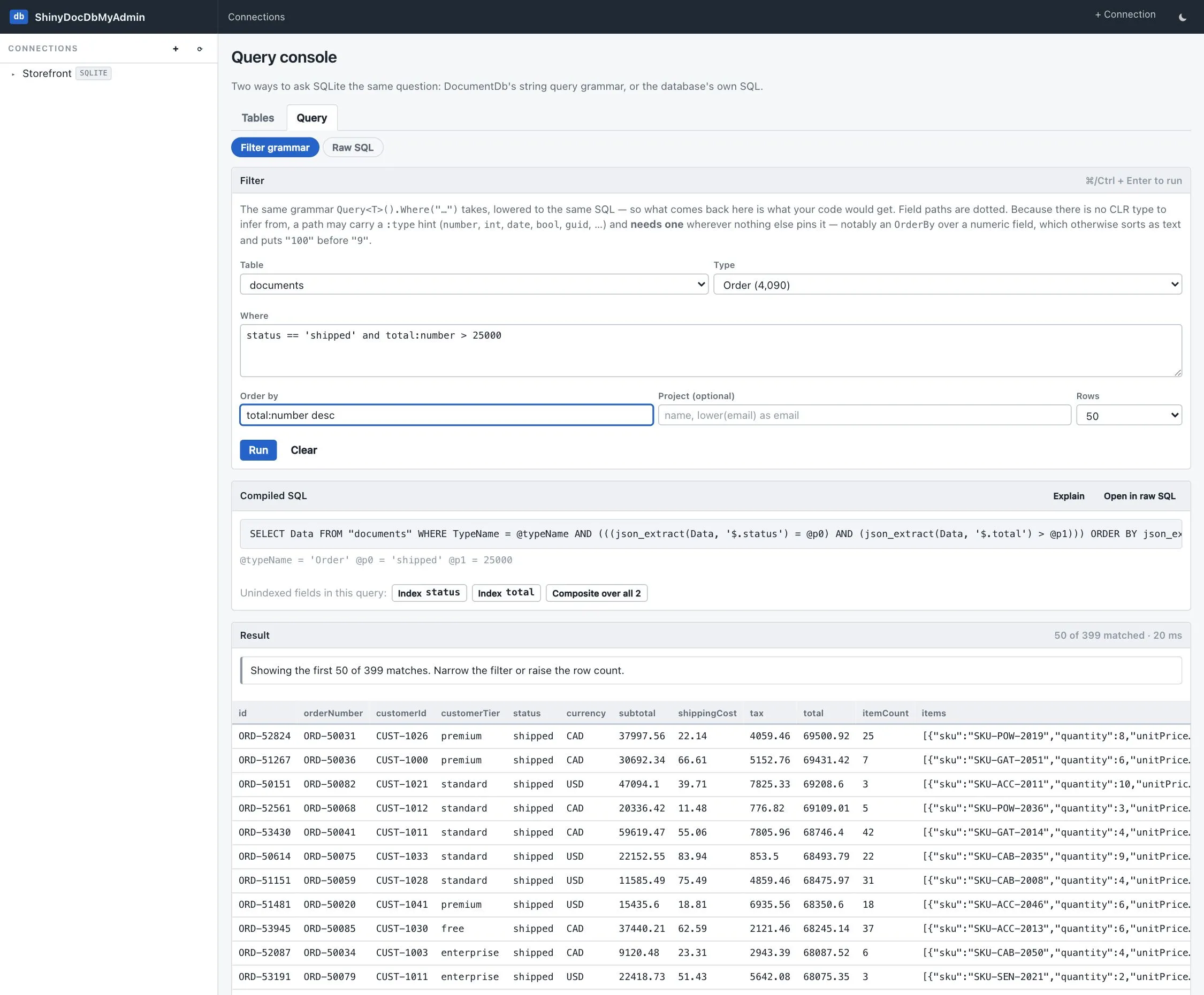
It is not a reimplementation: the console opens store.Collection(typeName) — the schema-free
JSON collection lane — and runs your text through the same parser,
translator and SQL builder the library does. So the answer is the answer your code would get.
The compiled SQL is shown next to the results, with its bound parameters, and Open in raw SQL drops it straight into the other mode — which makes the grammar something you can learn by using rather than by reading.
Type hints
Section titled “Type hints”Because there is no CLR type to infer from, field paths take an optional :type hint (number, int,
date, bool, guid, …) and need one wherever nothing else pins the type — most often an OrderBy
over a numeric field, which otherwise sorts as text and puts "100" before "9".
Two limits worth knowing
Section titled “Two limits worth knowing”- A store configured with
TypeNameResolution.FullNamewrites dotted type names, which the collection lane will not address. The console says so and points at the SQL mode. - The grammar addresses fields inside
Data, not the envelope columns — use SQL for those.
Explain
Section titled “Explain”Explain runs the provider’s own query plan over that SQL — EXPLAIN QUERY PLAN on SQLite, EXPLAIN
on PostgreSQL/MySQL, SHOWPLAN_TEXT on SQL Server, DBMS_XPLAN on Oracle. The statement is
planned, not executed, so this is safe on a read-only connection, which is where you most want to ask
why something is slow.
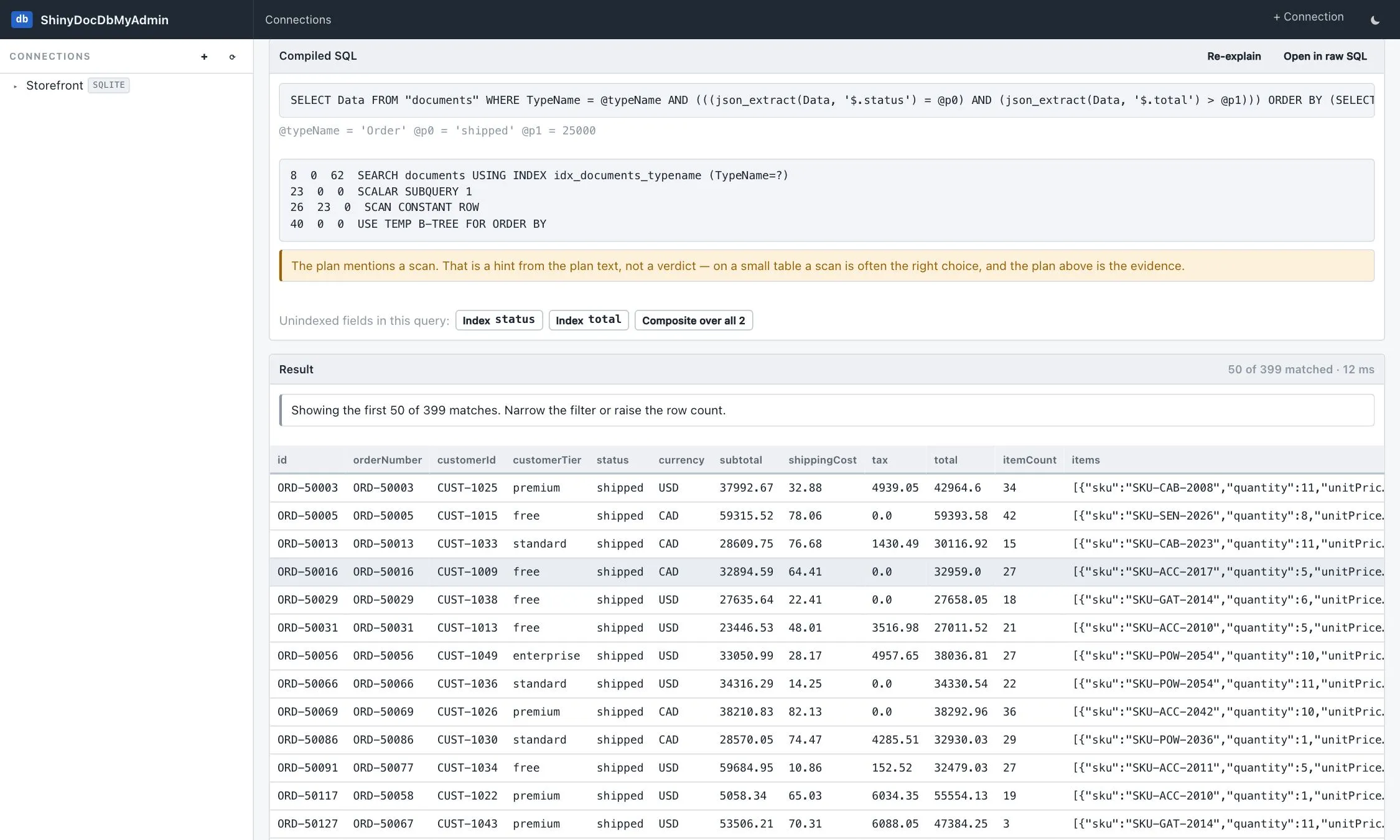
Below the plan, any field the query filters or sorts on that has no index is offered as a one-click create — individually or as a composite over all of them — after which the query re-runs and re-explains, so what you see is the plan after the change rather than a claim that it helped.
Two honest limits. The unindexed-field list is read from your filter text, not from the plan: engines name the object they scanned, not the JSON path inside it, so the plan tells you whether it matters and the filter tells you what to do about it. And the “this looks like a scan” hint is a text match on the plan — on a small table a scan is often the right choice, which is why the plan itself is always shown.
Raw SQL
Section titled “Raw SQL”Whatever you type, in the target database’s own dialect.
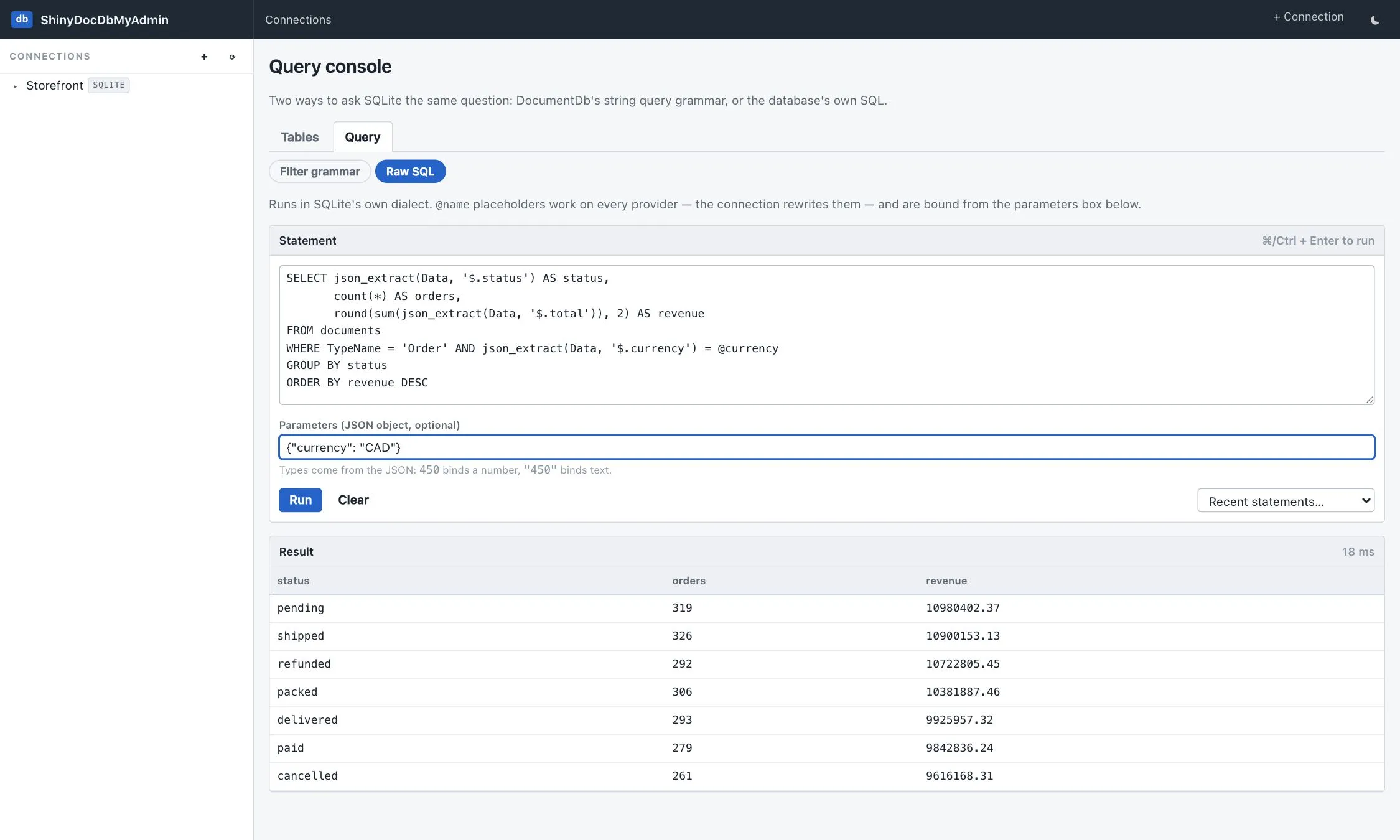
@name placeholders work on every provider — each connection rewrites them to whatever its own driver
expects — and are bound from a JSON box, so the types stay honest: 450 binds a number, "450" binds
text. On SQLite that is the difference between a numeric and a lexical comparison.
Results are capped at 1,000 rows, and the console says when it truncated rather than quietly showing you the first page as if it were everything. Statements that return no grid report the affected-row count instead. Recent statements are kept per session in a dropdown.
On a read-only connection the console refuses
anything that is not a lone SELECT / WITH / SHOW / EXPLAIN / DESCRIBE / PRAGMA, and rejects a
statement containing a second one. That check is a guard on the flag, not a security boundary — the
database account is.